
NordVPN is the top overall pick in this comparison. ExpressVPN is a strong choice for streaming, Surfshark stands out on value and unlimited simultaneous connections, and Proton VPN is the go-to when privacy is the priority. This guide to the best VPN services for 2026 explains why, using published third-party test results, independent audit details and official pricing. Hagaha has not run its own speed or streaming tests.
Affiliate disclosure: Hagaha may earn a commission if you buy NordVPN through links on this page, at no extra cost to you. Hagaha has no affiliate relationship with the other providers listed. The order below is based on the published test results and audits cited, not on commissions.
If you’ve read VPN reviews elsewhere and came away more confused than when you started, this is the guide that cuts through it.
Key takeaways
- Best for privacy: Proton VPN says its 2026 Securitum review was the fifth consecutive annual audit of its no-logs policy (Proton VPN). It is based in Switzerland and publishes open-source apps.
- Fastest in recent tests: NordVPN and ExpressVPN tied for the smallest average speed loss (7.8%) in Gizmodo’s October 2026 tests.
- Watch renewal prices: Introductory prices usually rise when the first term renews. Check the renewal price on the provider’s checkout page before you pay.
- Audits beat policies: A no-logs privacy policy is self-reported. An independent audit from a firm such as Deloitte or KPMG reviews a defined scope at a specific point in time.
How we compare VPNs at Hagaha
This comparison combines three kinds of evidence: published third-party test results (speed and streaming), independent no-logs audits, and the providers’ own pricing and refund pages. We link each source, note its date, and do not present provider claims as our own test results.
VPN comparison at a glance
| Provider | Best for | Average speed loss (Gizmodo, Oct 2026) | Latest no-logs audit | Money-back guarantee |
|---|---|---|---|---|
| NordVPN | Overall | 7.8% | Deloitte, December 2025 | 30 days |
| ExpressVPN | Streaming | 7.8% | KPMG, as of February 2025 | Check current terms |
| Surfshark | Value, unlimited devices | 9.6% | Deloitte, 2025 | 30 days |
| Proton VPN | Privacy | Not reported as a percentage | Securitum, 2026 | 30 days (paid plans) |
| Private Internet Access | Households | 12.7% | Deloitte Audit Romania, 2025 | Check current terms |
| CyberGhost | Long refund window | Not reported | Deloitte Audit Romania, 2025 | 45 days on plans longer than 6 months |
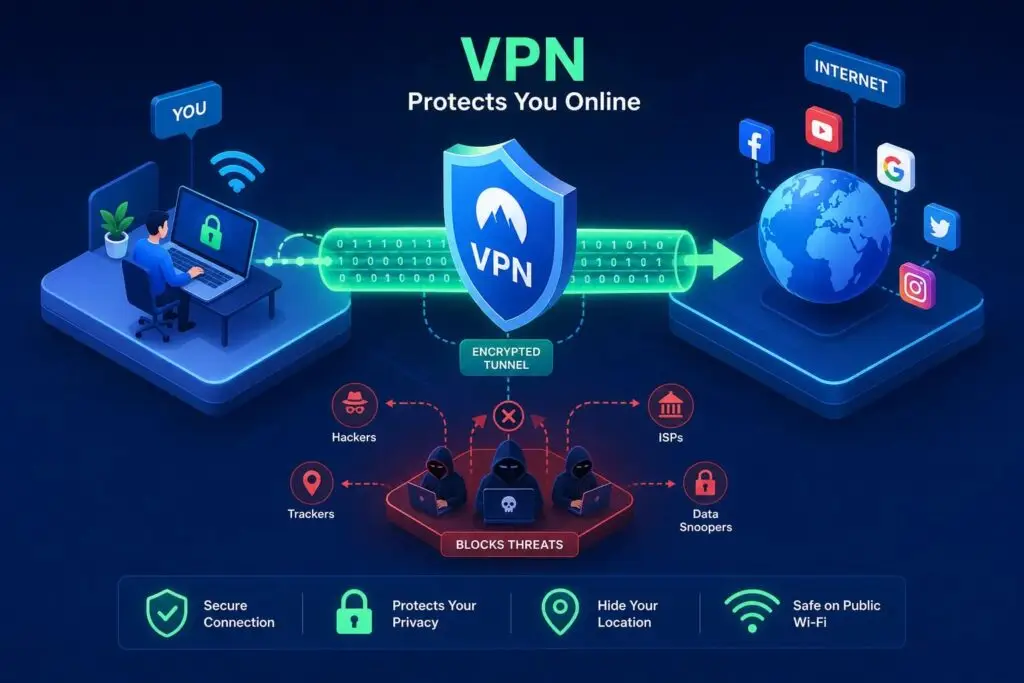
One clarification worth making before we get into details: a privacy policy is a document a company writes about itself. An independent no-logs audit is a third-party firm reviewing the actual server infrastructure to confirm it matches those claims. That difference matters, and we note the specific auditor and year for each provider below. If you are new to VPNs, read how a VPN protects your internet connection or our guide on how to choose a VPN.
Which VPN is the fastest in 2026?
In Gizmodo’s best VPN tests (published October 29, 2026), NordVPN and ExpressVPN tied for the smallest average speed loss: 7.8% compared with the same connection without a VPN, averaged across UK, US and Japanese servers. NordVPN’s result uses NordLynx, its implementation built around the WireGuard protocol.
Surfshark followed with a 9.6% average speed loss, and Private Internet Access recorded 12.7%. Proton VPN posted the lowest US ping Gizmodo recorded (109 ms), and with its VPN Accelerator feature enabled its download speeds stayed close to the leaders.
For most everyday tasks, a difference of a few percentage points in speed loss is hard to notice, because your own internet connection is usually the limiting factor. Speed matters more if you have a very fast connection, upload large files regularly, or connect to distant servers.
Where these speed figures come from
The speed figures in this section come from Gizmodo’s published tests, which compare each VPN against a no-VPN baseline across several server locations. Hagaha did not run these tests, and your results will vary by location, network, server and time of day.
Best VPN services reviewed for privacy: which ones actually protect you?
Among the six providers covered here, audit recency varies. Proton VPN’s 2026 Securitum review was its fifth consecutive annual no-logs audit (Proton VPN). NordVPN completed its sixth Deloitte no-logs assurance engagement in December 2025 (NordVPN). KPMG assessed ExpressVPN’s no-logs claims as of February 28, 2025 (ExpressVPN). Surfshark has published Deloitte no-logs reports from 2023 and 2025 (Surfshark). CyberGhost and Private Internet Access both completed their third Deloitte Audit Romania reviews in 2025 (CyberGhost, PIA). Each audit covers a defined scope at a point in time, so read the scope before treating it as proof.
Two features you’ll see highlighted across every provider’s marketing deserve a plain-language explanation. RAM-only servers hold data in volatile memory, which means everything is wiped when the server reboots. No persistent disk storage means no persistent data. A kill switch blocks all internet traffic the instant your VPN connection drops, preventing your real IP address from being exposed during a lapse. Both features matter, but neither replaces an independent audit as evidence that a provider actually keeps no logs.
On the protocol side, WireGuard is the open-source standard most providers now use. NordVPN wraps WireGuard in NordLynx, adding privacy-design elements on top. ExpressVPN’s Lightway protocol was built by ExpressVPN with a smaller codebase, optimized for fast reconnection when switching between Wi-Fi and cellular. Proton VPN adds a Stealth protocol for users in restricted or censored networks.
These differences matter most in specific scenarios: Lightway wins on reconnection stability, NordLynx wins on raw throughput, and Stealth wins when a VPN connection needs to evade detection.
Best VPN services reviewed for streaming in 2026
In Gizmodo’s October 2026 streaming tests, NordVPN unblocked every streaming service it tested, and NordVPN and ExpressVPN both unblocked the US, Canadian and Japanese Netflix libraries. Proton VPN unblocked most of the services but failed on ITV and Pluto TV. Results change often as streaming platforms update their VPN detection.
Before using a VPN with a streaming service, read that service’s terms of use. Many platforms license content by region, and using a VPN to change your apparent location may conflict with their rules.
No streaming pick comes with a permanent guarantee. Streaming platforms continually block VPN IP addresses, and providers rotate their addresses in response. When a server stops working for a specific service, switching to a different city server in the same country and reconnecting usually resolves the issue quickly, though results can vary by provider, network, and IP rotation cycle.
What will a VPN actually cost you?
Beyond performance, what you pay over time is where most buyers get surprised. Promotional pricing and renewal pricing are two very different numbers. Before you pay, check the total charged upfront, the length of the term and the renewal price on the provider’s checkout page. For example, on October 30, 2026 Surfshark’s pricing page listed Surfshark Starter at $67.23 for the first 27 months (VAT may apply).
Most VPN providers take your payment first and give you a refund window. Surfshark and NordVPN also offer 7-day free trials on eligible plans (payment details are required), alongside their 30-day money-back guarantees. CyberGhost has the longest refund window at 45 days on eligible longer-term plans. One important note: if you purchase through the Apple App Store or Google Play, the refund terms are set by that platform, not by the VPN provider. Buy directly through the provider’s website to keep the full refund period.
Which VPN should you get based on your needs?
This is where our best VPN services reviewed list becomes a practical decision tool. The right pick depends on which criteria matter most to you.
Best overall: NordVPN. For readers who want one well-rounded choice, NordVPN is the recommendation in this comparison: it tied for the smallest average speed loss in Gizmodo’s October 2026 tests, unblocked every streaming service in that test set, and completed its sixth Deloitte no-logs assurance engagement in December 2025. Compare current plans on NordVPN’s website.
Best for privacy: Proton VPN. Swiss jurisdiction, Secure Core multi-hop routing, open-source apps, and a fifth consecutive independent audit from Securitum make Proton the strongest choice for users whose primary concern is verifiable, architecture-backed privacy. Its streaming results were weaker than the leaders’ in Gizmodo’s tests (it failed on ITV and Pluto TV), a trade-off that matters less if streaming is not your priority.
Best value and best for households: Surfshark and PIA. Both allow unlimited simultaneous connections, which makes them practical for families with many devices.
Our final call on the best VPNs in 2026
The best VPN services reviewed in this guide are not interchangeable, and choosing the wrong one for your needs means paying for features you won’t use while missing the ones you do. NordVPN is the most well-rounded option in this comparison. Proton VPN stands out for regularly audited privacy. Surfshark wins for device count and value. ExpressVPN tied NordVPN in Gizmodo’s speed tests and unblocked the US, Canadian and Japanese Netflix libraries.
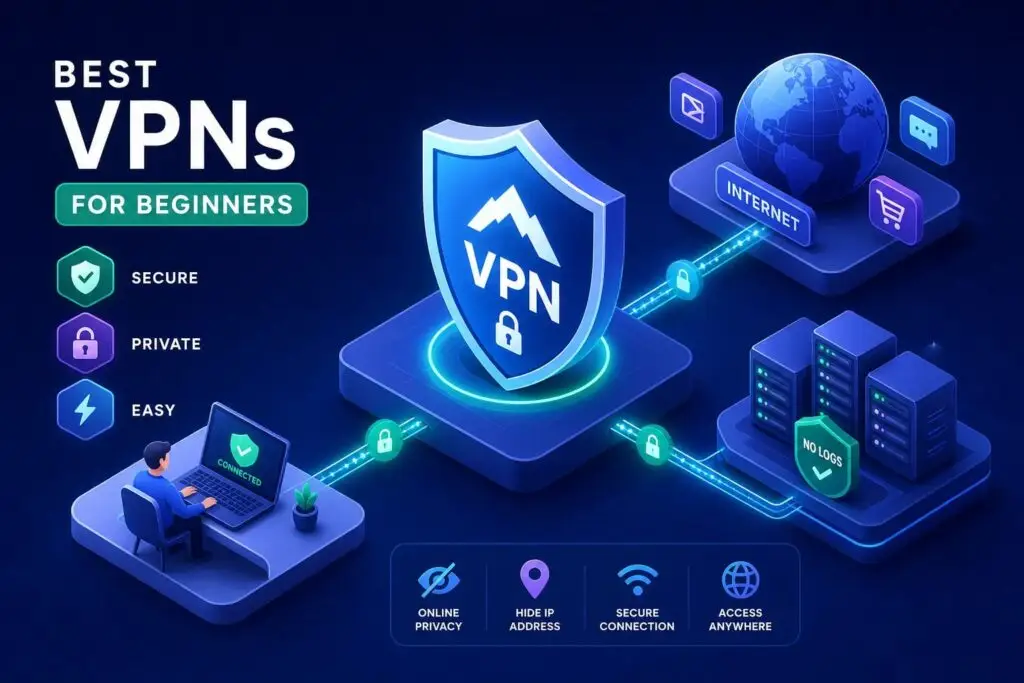
Prices and test results change, so each source above is dated. If you are new to VPNs, start with our guide on what beginners should compare first. The comparison table above is built to help you match your priorities to the right provider at a glance. Once you’ve picked one, take advantage of the money-back guarantee to test it on your own devices and connection before the real renewal cost kicks in.
Frequently Asked Questions
How long are the refund windows and free trials for these VPNs?
Refund windows and free trials vary by provider; Surfshark and NordVPN offer 7-day trials on eligible plans plus 30-day money-back guarantees, and CyberGhost provides a 45-day refund window on eligible longer-term plans. If you buy through the Apple App Store or Google Play, the platform sets the refund terms rather than the VPN provider, so buy directly from the provider’s website to keep the full refund period.
Which providers let you connect the most devices at once?
If device count and simultaneous connections are your priority, Surfshark and PIA both allow unlimited simultaneous connections on one subscription. NordVPN allows up to 10 devices and CyberGhost up to 7. Check the limit for the plan you choose, since some bundled extras have their own device limits.
Will a VPN always unblock streaming platforms like Netflix or Hulu?
No, a VPN will not permanently guarantee access to every streaming platform because streaming services continually block VPN IP addresses and providers must rotate addresses in response. When a server stops working for a service, switching to a different city server in the same country and reconnecting usually resolves the issue, though results can vary by provider and IP rotation cycle.