A cheap VPN is only a good deal if you understand what you will pay after the first term, how many devices you can connect, and how much evidence supports the provider’s privacy claims. This guide compares five of the best affordable VPN options for US readers in 2026: Private Internet Access (PIA), CyberGhost, Surfshark, NordVPN, and Proton VPN’s free plan.
How this guide was researched: Hagaha has not tested these VPNs hands-on. Prices, device limits, refund terms, and audit details were checked on the providers’ official pages on October 30, 2026, and every important claim links to its source. Prices and terms change often, so confirm them at checkout.
Affiliate disclosure: Hagaha may earn a commission if you buy through some links on this site, at no extra cost to you. This article contains no affiliate links, and no provider paid for its placement.
Best Affordable VPN Services: Key Takeaways
- Lowest long-term price checked: PIA’s 3-year plan costs $79 and, according to PIA’s checkout page, renews at $79 every 3 years.
- Longest refund window: CyberGhost offers 45 days on its 6-month and 2-year plans (14 days on the monthly plan) when you buy directly from CyberGhost.
- Most devices: PIA and Surfshark allow unlimited simultaneous connections; NordVPN allows 10 and CyberGhost 7.
- Renewal prices matter: NordVPN Basic costs $94.23 for the first 27 months, then renews at $139.08 per year.
- No-cost option: Proton VPN’s free plan has no data limit but works on one device and offers fewer locations than paid plans.
Affordable VPN Comparison Table (Checked October 30, 2026)
| VPN and plan | First-term price | Renewal price | Devices | Money-back guarantee | Latest no-logs audit |
|---|---|---|---|---|---|
| PIA (3 years) | $79 for 3 years | $79 every 3 years | Unlimited | 30 days (new subscribers) | Deloitte Audit Romania, 2025 |
| CyberGhost (2 years + 2 months) | $56.94 for the first 2 years | $56.94 per year | 7 | 45 days (14 days on monthly) | Deloitte Audit Romania, 2025 |
| Surfshark Starter | $67.23 for 27 months | Not shown on the pricing page* | Unlimited | 30 days (eligible purchases) | Deloitte, 2025 |
| NordVPN Basic | $94.23 for 27 months | $139.08 per year | 10 | 30 days | Deloitte, December 2025 |
| Proton VPN Free | $0 | $0 | 1 | Not applicable | Securitum, 2026 |
The Best Affordable VPN Options Compared
1. Private Internet Access (PIA): Lowest Long-Term Price
PIA’s checkout page lists the 3-year plan at $79 (about $2.03 per month), renewing at $79 every 3 years. PIA allows unlimited simultaneous connections, says it supports P2P traffic on all servers, and completed its third Deloitte Audit Romania review in 2025.
- Strongest advantage: The lowest long-term cost among the paid plans checked, plus unlimited devices.
- Limitations: PIA is based in the US, which some privacy-focused readers prefer to avoid. Port forwarding is not available on US server locations. The 30-day refund applies to new subscribers, and app-store purchases follow the store’s refund rules.
- Who should consider it: Budget-focused households and people who share files over P2P.
- Who may prefer another provider: Readers who want a provider based outside the US, or who need port forwarding on US servers.
2. CyberGhost: Longest Refund Window
CyberGhost’s 2-year + 2-month plan costs $56.94 for the first two years and then renews at $56.94 per year. Its money-back guarantee is 45 days on 6-month and 2-year plans and 14 days on the monthly plan. One subscription covers 7 simultaneous devices.
- Strongest advantage: The most time to test a VPN before committing: 45 days on longer plans.
- Limitations: Seven devices may not be enough for larger households. Subscriptions billed through the App Store, Google Play, or Amazon are not covered by CyberGhost’s own guarantee. Note that the plan renews yearly, not every two years.
- Who should consider it: Buyers who want several weeks to test speed and streaming on their own connection.
- Who may prefer another provider: Households with many devices, who may prefer PIA or Surfshark.
3. Surfshark Starter: Unlimited Devices with a Trial
Surfshark Starter is listed at $67.23 for the first 27 months on its pricing page. It allows unlimited simultaneous connections, and new users can get a 7-day free trial on 12- and 24-month plans; payment details are required, and the trial is limited to three devices. A 30-day money-back guarantee applies to eligible purchases. Surfshark published its second Deloitte no-logs report in 2025.
- Strongest advantage: Unlimited devices plus a short trial before the 30-day guarantee begins.
- Limitations: Surfshark does not show the renewal amount on its pricing page; Gizmodo reported $79 per year in October 2026. Surfshark and NordVPN have belonged to the same group, Nord Security, since 2022.
- Who should consider it: Families and multi-device users who want to try the app first.
- Who may prefer another provider: Readers who want the renewal price confirmed before buying, or who want two unrelated companies when comparing providers.
4. NordVPN Basic: Most Features for the Price
NordVPN Basic costs $94.23 for the first 27 months and renews at $139.08 per year, according to its pricing page. It covers up to 10 devices, and its sixth Deloitte no-logs assurance engagement was completed in December 2025. NordVPN says P2P works on all standard servers.
- Strongest advantage: A broad feature set and recent independent no-logs assurance.
- Limitations: It has the highest renewal price in this comparison. Trial terms vary: NordVPN’s help center lists a 7-day trial on eligible website plans and a 3-day trial for first-time Android users on Google Play.
- Who should consider it: Readers who will pay more for features and a large provider.
- Who may prefer another provider: Strict budget buyers, who will find lower renewal prices at PIA or CyberGhost.
5. Proton VPN Free: The No-Cost Option
Proton VPN’s free plan has no data or time limit and shows no ads, but it covers one device and offers fewer locations than paid plans. Proton says its 2026 Securitum review was the fifth consecutive annual audit of its no-logs policy.
- Strongest advantage: You pay nothing and still get an audited provider.
- Limitations: One device, fewer server locations, and fewer features than paid plans.
- Who should consider it: Light users and anyone who wants to try a VPN before paying.
- Who may prefer another provider: Households, frequent travelers, and people who need many locations.
First-Term Price vs. Renewal Price: What You Really Pay
Most low-cost VPN plans quote a monthly equivalent but charge the whole term upfront, and the renewal price can be very different. Using the prices checked on October 30, 2026, here is what the first term plus one renewal looks like:
- PIA: $79 for 3 years, then $79 for the next 3 years.
- CyberGhost: $56.94 for the first 2 years (plus 2 months), then $56.94 for each following year.
- NordVPN Basic: $94.23 for 27 months, then $139.08 for the next year, or $233.31 in total for 39 months.
- Surfshark Starter: $67.23 for 27 months, then the renewal price shown at checkout or in your account.
Before you pay, check the total charged today, the length of the term, and the renewal price on the checkout page. Put the renewal date in your calendar so that you can decide in advance whether to renew, switch plans, or cancel.
Does a Cheap VPN Still Protect Your Privacy?
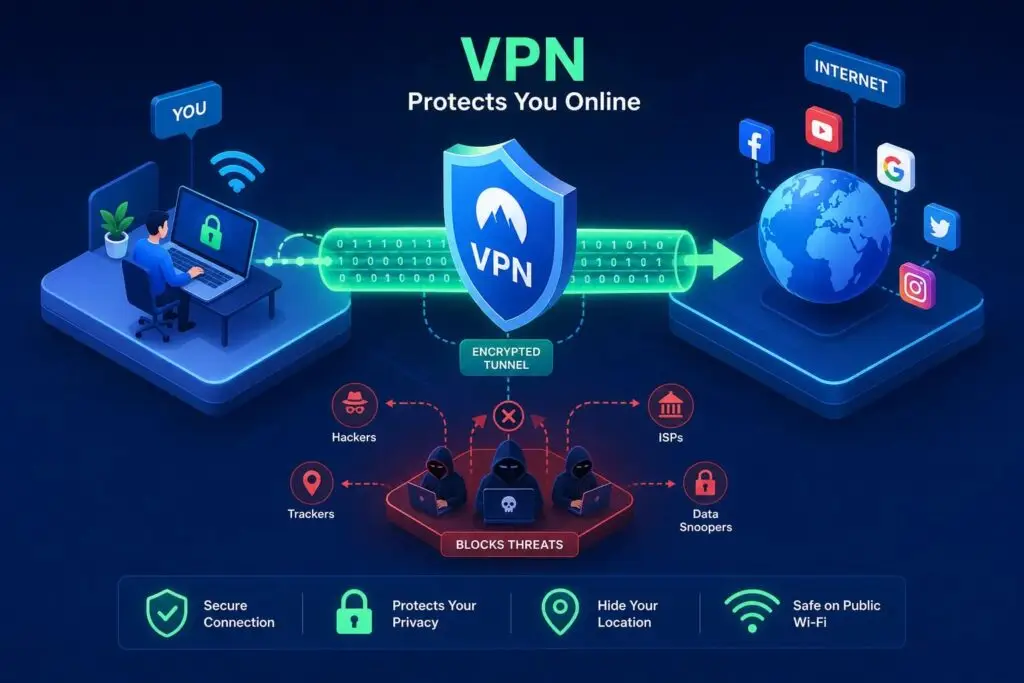
Price says little about privacy. What matters is what the provider logs, what independent reviews have checked, and who owns the company. If you are new to the basics, start with how a VPN protects your internet connection.
No-logs audits: what they show and what they do not
A no-logs audit checks a defined set of systems at a specific time. It is useful evidence, not a permanent guarantee. The audits differ by provider: NordVPN’s sixth Deloitte engagement ran from November 10 to December 12, 2025; PIA and CyberGhost each completed a third Deloitte Audit Romania review in 2025; Surfshark published Deloitte reports in 2023 and 2025; and Proton VPN’s 2026 Securitum review was its fifth annual audit. Read each report’s scope and date before relying on it.
PIA in court: historical evidence, not an audit
PIA’s no-logs claim has come up in US court cases, including a 2018 case reported by TorrentFreak in which PIA said it had no logs that could identify a user. These cases are historical events, not independent audits, and they cannot show how the service works today.
Ownership and past incidents
Surfshark and NordVPN have been part of Nord Security since 2022, and PIA and CyberGhost are owned by Kape Technologies. That matters if you want to compare companies that are truly independent of each other. Past cases also show why “no logs” in marketing is not enough: PureVPN logs helped the FBI in a 2017 cyberstalking case, and the Center for Democracy & Technology filed an FTC complaint about Hotspot Shield’s free app in 2017.
Features to Check Before Buying a Budget VPN
- Kill switch: A system-wide kill switch blocks all internet traffic if the VPN drops, so your real IP address is not exposed. An app-level kill switch protects only the apps you choose.
- Protocols and encryption: WireGuard is fast and modern, and it uses ChaCha20-Poly1305, not AES. AES-256 is typically used with OpenVPN and IKEv2/IPsec. Both are strong when implemented correctly.
- P2P and port forwarding: PIA says it allows P2P on all servers, and NordVPN says P2P works on its standard servers. PIA’s port forwarding is not available on US servers.
- Device limits: unlimited (PIA, Surfshark), 10 (NordVPN), 7 (CyberGhost), or 1 (Proton VPN Free).
- Dedicated IP: Some providers sell a dedicated IP as a paid add-on. It can reduce CAPTCHAs and help with services that allowlist addresses, but it links your activity to one address, so it is less private than a shared IP.
Can an Affordable VPN Handle Streaming?
Speed is rarely the limit: Netflix recommends 15 Mbps or higher for 4K streaming. Access is the harder part. Streaming services block known VPN addresses, and results change often, so this guide does not quote success rates without a credible, dated, original test. Use the refund window to test the services you actually watch, and read each streaming service’s terms of use, since watching another region’s catalog may break them.
How to Try a Budget VPN Risk-Free
- Buy directly from the provider: App Store and Google Play purchases follow the store’s refund process, and CyberGhost’s guarantee excludes App Store, Google Play, and Amazon billing.
- Request a refund a few days before the deadline (14, 30, or 45 days, depending on provider and plan), and keep your confirmation email.
- Canceling auto-renewal is not the same as requesting a refund; contact support to ask for the refund.
- Trials have limits: Surfshark’s 7-day trial covers three devices, and NordVPN’s trial length depends on where you buy.
Bottom Line: Which Affordable VPN Fits Your Needs?
- Lowest long-term cost: PIA, if a US-based provider is acceptable to you.
- Most time to test: CyberGhost, with 45 days on longer plans bought directly.
- Many devices plus a trial: Surfshark Starter, after you check its renewal price.
- More features for a higher renewal price: NordVPN Basic.
- No budget at all: Proton VPN Free on one device.
No VPN is best for everyone. For a broader framework, see our guide on how to choose a VPN, our best VPN services comparison, the Surfshark review, or what beginners should compare first.
Frequently Asked Questions
What is the cheapest VPN that is still trustworthy?
Among the paid plans checked on October 30, 2026, PIA’s 3-year plan had the lowest long-term price ($79 every 3 years), and PIA completed a Deloitte no-logs review in 2025. If you need no cost at all, Proton VPN’s free plan is audited but limited to one device.
Why does my VPN cost more when it renews?
Introductory prices are discounts on the first term. Renewal prices are usually higher; NordVPN Basic, for example, renews at $139.08 per year after its first 27 months. Check the renewal price at checkout.
Can I get a refund if I bought through the App Store?
Usually not from the VPN provider directly. App Store and Google Play purchases follow those stores’ refund processes, and CyberGhost’s guarantee explicitly excludes App Store, Google Play, and Amazon billing.
Does a no-logs audit guarantee my privacy?
No. An audit confirms that specific systems matched the provider’s no-logs policy at a specific time. Treat it as one piece of evidence alongside the provider’s jurisdiction, ownership, and history.
References
- PIA: Plans and pricing
- PIA: Simultaneous connections
- PIA: Third Deloitte audit (2025)
- PIA: Port forwarding availability
- CyberGhost: Plans and pricing
- CyberGhost: Money-back guarantee
- CyberGhost: Device limit
- CyberGhost: 2025 Deloitte assurance report
- Surfshark: Pricing
- Surfshark: Free trial
- Surfshark: Refund policy
- Surfshark: Deloitte no-logs audit (2025)
- NordVPN: Pricing
- NordVPN: Device limit
- NordVPN: Sixth no-logs assurance engagement
- NordVPN: Free trial
- Proton VPN: Free plan
- Proton VPN: No-logs audit
- WireGuard: Protocol and cryptography
- Netflix Help: Internet speed recommendations
- Gizmodo: Cheap VPN pricing (October 2026)
- Nord Security: Merger with Surfshark
- Kape Technologies: About us (CyberGhost, PIA and other brands)
- TorrentFreak: PIA no-logging claims in court (2018)
- Hackread: PureVPN logs and the FBI (2017)
- CDT: FTC complaint on Hotspot Shield (2017)